
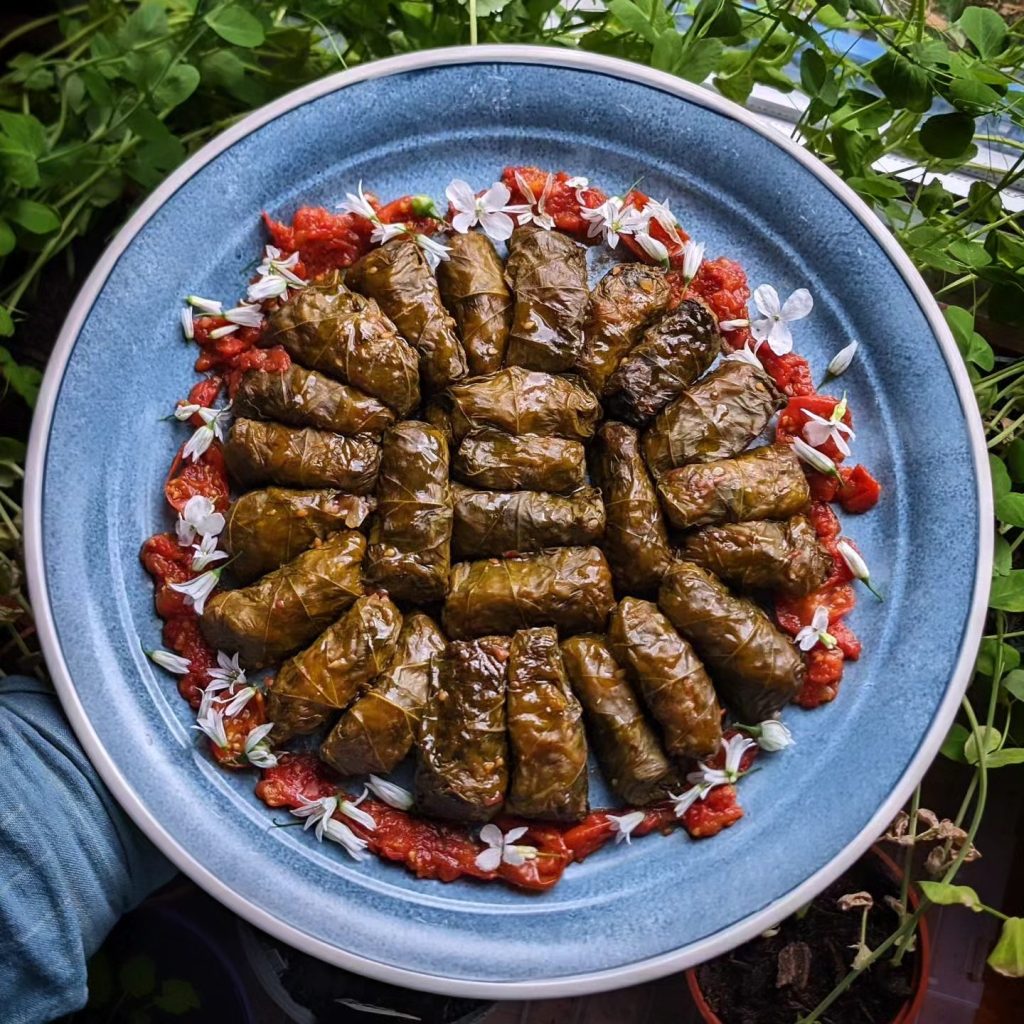
Wild leaf Yalanji
This is inspired by a recipe by Palestinian activist and chef Joudie Kalla. Joudie’s book, Palestine on a Plate, is full of beautiful, simple and high impact dishes from her home land. I have made dolma or or warak enab (or many other names!) style wrapped rice leaves for many years with wild leaves such as dock, broadleaf plantain or linden leaf but this recipe has come to become my favourite and is always very popular as a shared dish. There is something magical about the braising stage that makes these so moreish. I deviate from Kalla’s recipe in that I braise these in the oven as it is much more simple and this works well both in an oven safe pan or in a roasting tray. I’ve also used a different variety of spicing each time but they always come out perfect no matter how you choose to tweak them. They can also be happily made with blanched cabbage leaves too, if you don’t feel like foraging for one ingredient – I will not judge you.
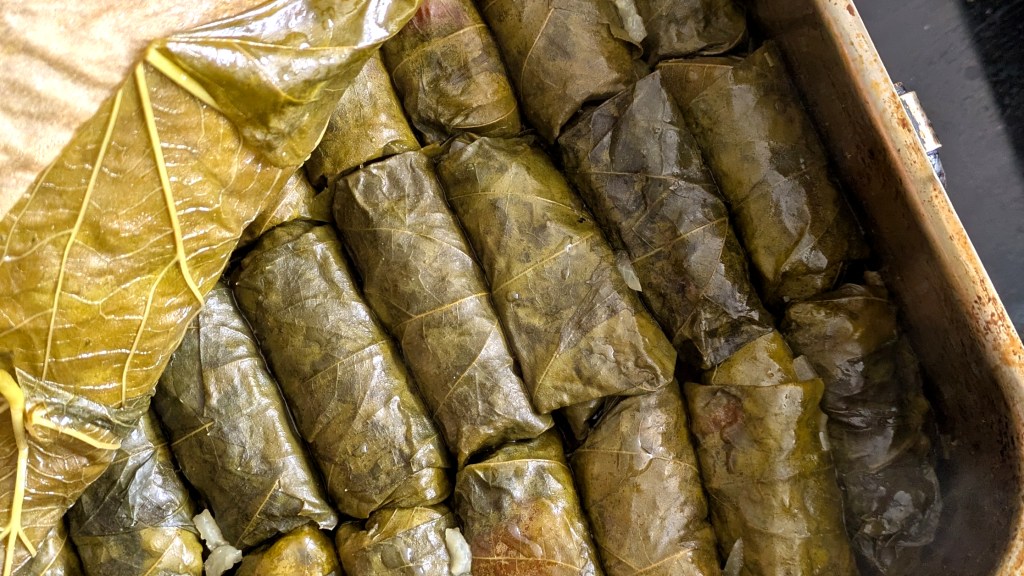
The yalanji braised in a roasting pan.
Ingredients
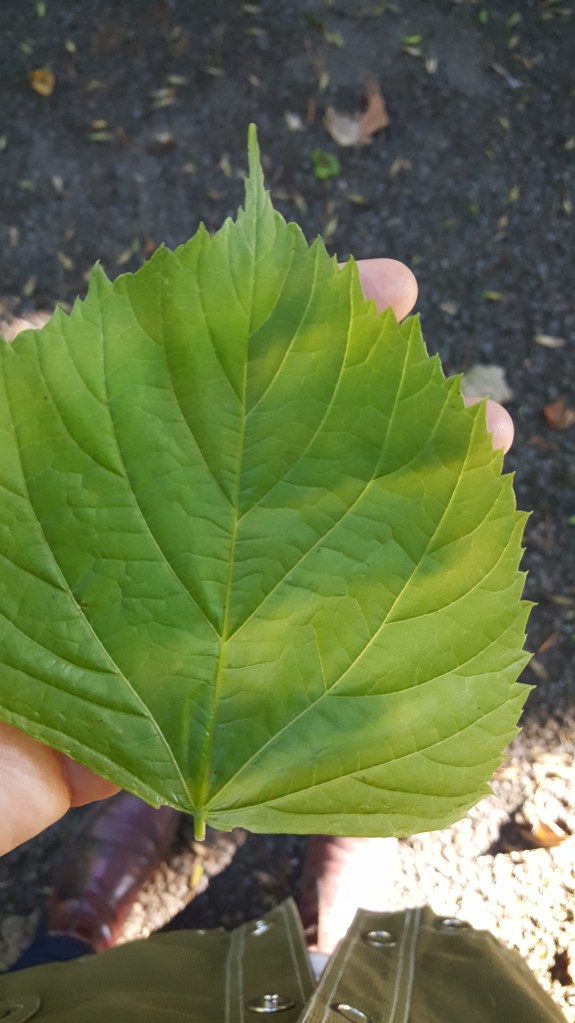
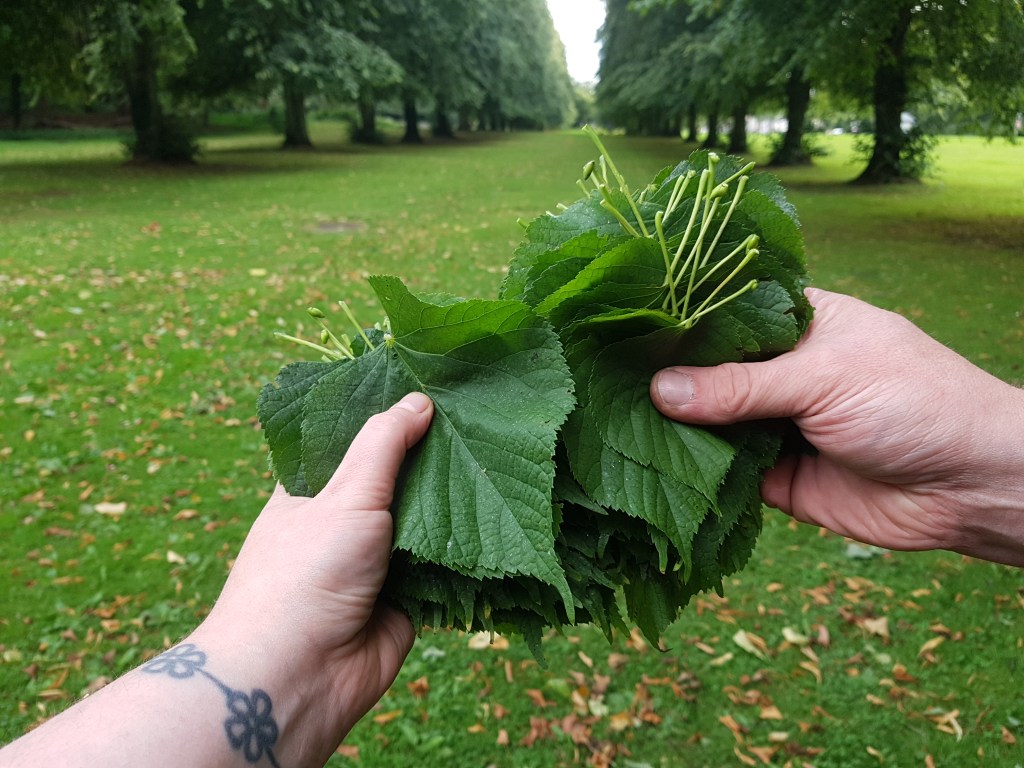
20 to 30-ish broad linden tree leaves – see this blog for details!
300g short grain rice – I used sushi rice and they came out beautifully.
Couple of handfuls of wild garlic or 1 onion.
Couple of handfuls of wild herbs such as ground elder, sorrel and cow parsley.
4 large fresh tomatoes
1 tsp Palestinian sumac – I used Al’ard brand
2 tsp (or more if you like spicy) Palestinian Shata – I used Al’ard brand
1 tin of chopped tomatoes
500ml vegetable stock – I used a stock cube.
Salt & Pepper
Olive oil – Palestinian is best – I love Zaytoun and buy it from Ethical Superstore online.
Instructions
1. Begin by prepping the leaves – give them a thorough wash under water. Bring a large pot of water to the boil and plunge the whole leaves into the pot all at once. Wait just a few seconds and lift them out and run them under cold water to stop the cooking. They should be pliable. Cut off the stem of each leaf. I find I can do this by stacking a few at once. Set aside
2. Preheat the oven to 160ºC.
3. Using any broken leaves, line the base of a tray or a pot with them, layering them up against each other. Pour over the tin of tomatoes and spread it out into a thin layer. If using a pot you might need to do two layers so save a bit of the tomato to do this.
3. Wash the rice under water until it runs clear. Chop the garlic/onion, herbs and tomatoes into fine chunks. Add to the rice and mix. Season this generously with salt and pepper, the sumac and the shata. Finsh with a glug of olive oil.
4. To fill – take a leaf and place it so the upside is on the board. You should be able to clearly see the veins of the leaf underside. The stem end should be closest to you. Place a generous teaspoon of filling on the leaf. Tuck the bottom of the leaf over this and bring the two sides in. Roll the leaf away from you tucking and rolling until the tip of the leaf is right round. If your leaf breaks you might have overfilled. This is why it’s good to pick way more than you think you will need!
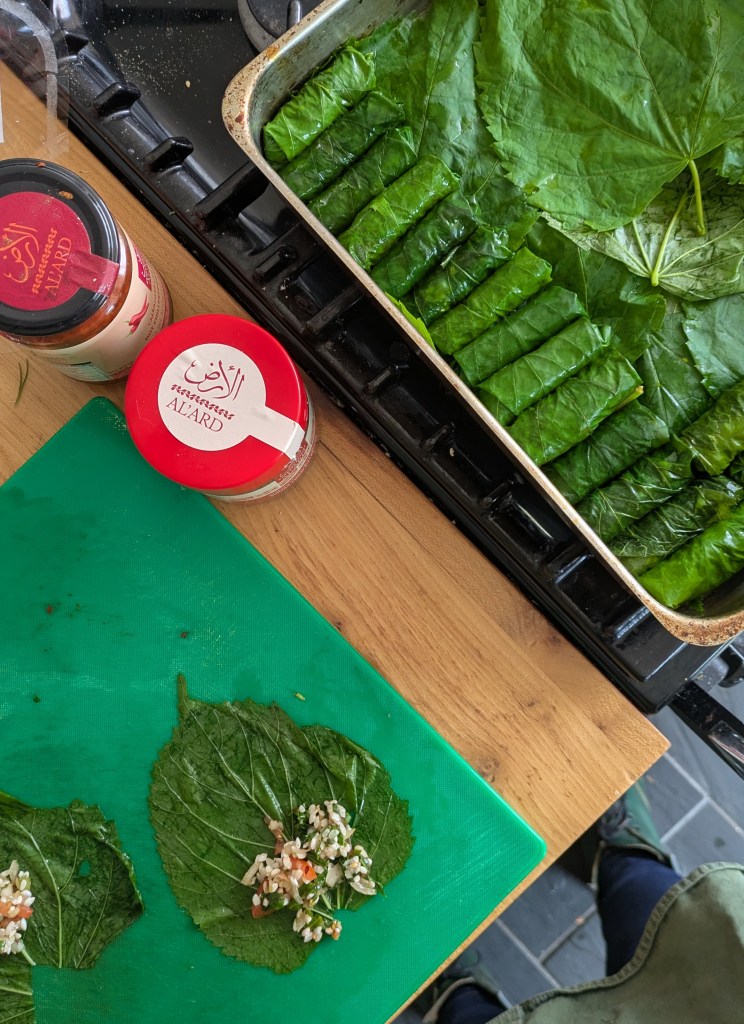
5. Place the roll into the prepared tin or pot. Repeat until all the leaves are used up.
6. If you have any more left over leaves place these over the top to seal in the braise.
7. Pour over the stock – it should come up to about half way up the rolls. Place a layer of grease proof paper and the lid of your pot or another tray on top to seal everything in.
8. Transfer to the oven and braise for 45 minutes – check one of the rolls at this time. If the rice is cooked then remove the tray but feel free to give them another 5 or 10 minutes if the rice is not cooked to your liking.
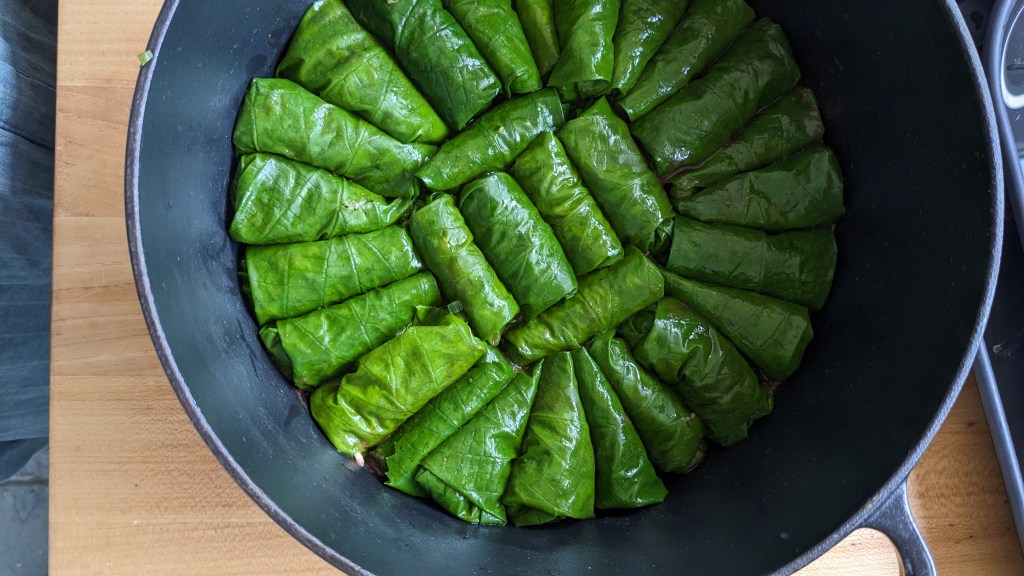
These can be served hot or cold but I think they taste the best when they are just warm and holding their shape easily. Serve with more olive oil and shata or dipped into humous.
 feasting on weeds