
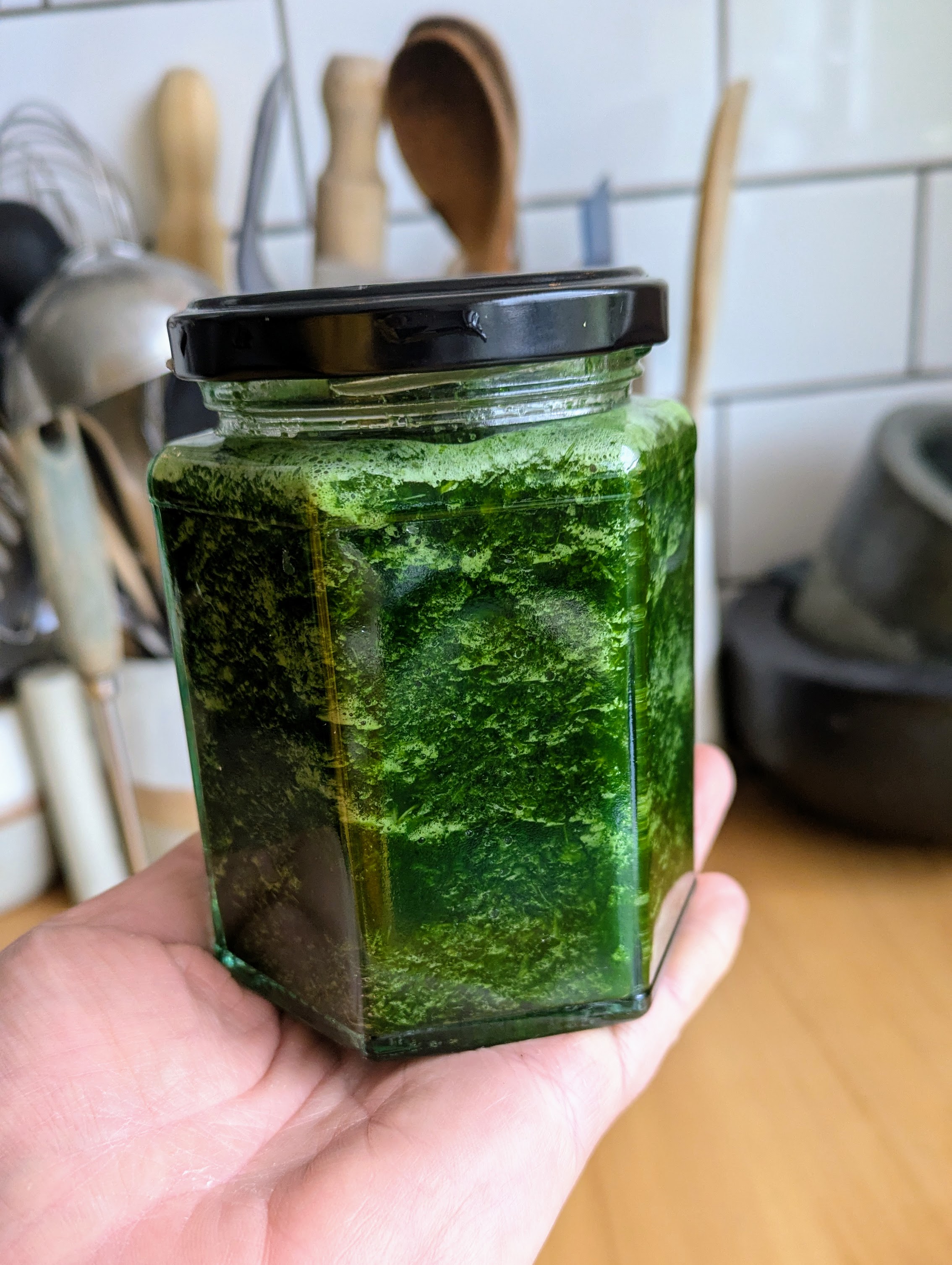
Wild Stock Base (and a soup to use it in!)
This is nothing new at all and my recipe is taken from one by Pascal Baudar. His book, The New Wildcrafted Cuisine, is full of inspiring recipes and gentle guides for stepping into the world of foraged cooking. It is so simple and based around the fact that salt is a brilliant preserver but also an excellent extractor of flavour. This will taste even better over time – Baudar suggests leaving it for weeks – but even the next day this will taste so savoury and punchy. Any greens will work so if you have an excess of herbs, carrot tops, scallion tops etc then try this out. This is a fantastic way to make the most of greens that might not taste quite so delicious on their own (I’m looking at you, winter dandelion leaves) and really packs a vegetable stock flavour which is such a useful ingredient all year round. For example, the simple vegetable broth I’ve made below turns into something so flavoursome with just a spoonful.
Wild Stock Base
This recipe can easily be multiplied but I prefer to make little and often for the sake of fridge space and to keep things fresh. It’s really important to sterilise everything you use first if you want to keep this for a long time as this is a raw product – boil your jars and any utensils you use first. I always try to use mine over a few weeks and then make a fresh batch with whatever is new – spring is almost here so there will be new things to add in!
Ingredients
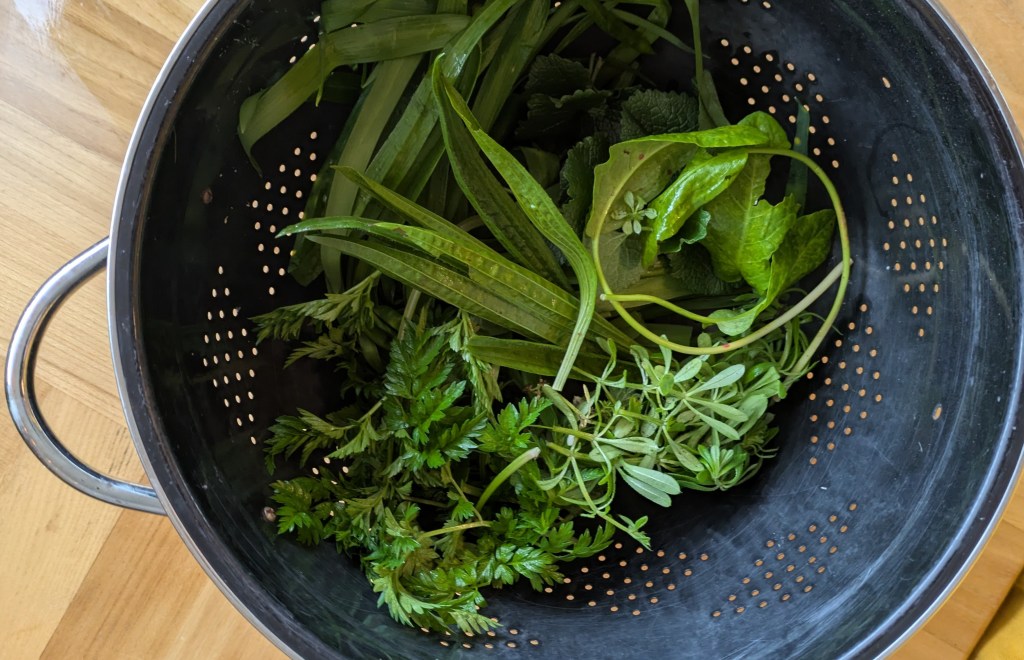
– A few handfuls of wild (or not so wild) greens – I used baby dock leaves, cleavers, three cornered leek, garlic mustard, ribwort plantain, dandelion and (a few) baby nettles. See what I gathered on my blog post here.
– Sea salt or rock salt
Instructions
1. Check over your forage and make sure there is nothing in there you don’t want. It’s a good idea to pick cleanly as you go so you don’t end up with a buttercup or ivy leaf! Wash all of the greens really thoroughly in lots of fresh water to make sure there are no contaminants.
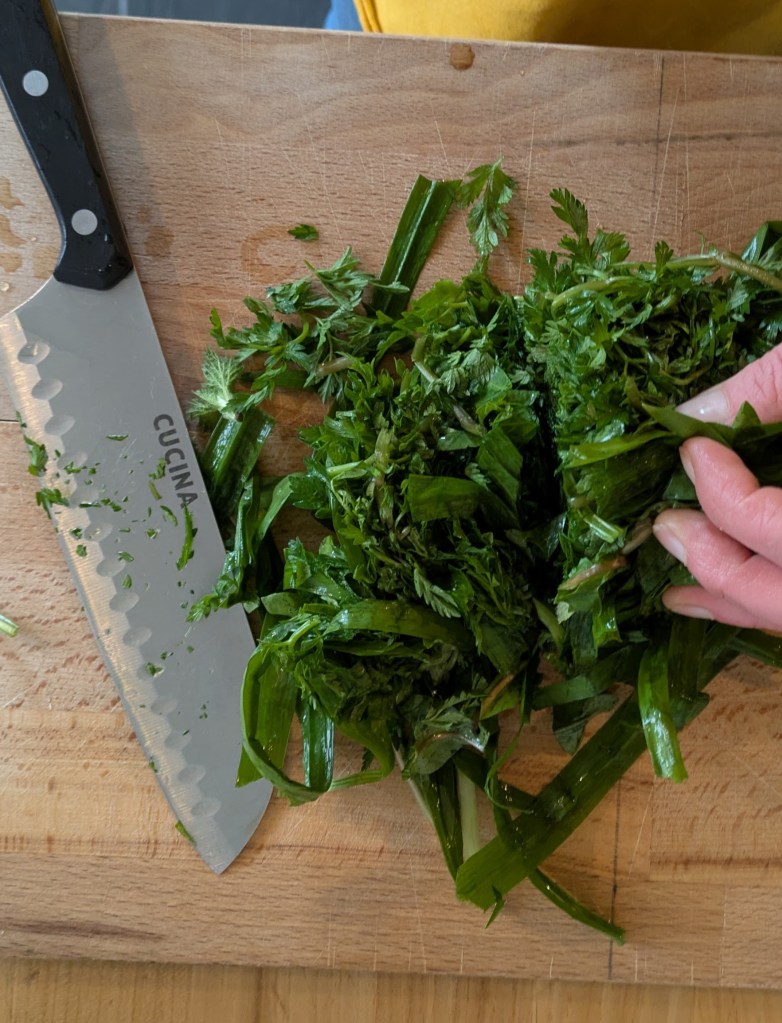
2. Bundle the greens together and give them a coarse chop. Unless you have a powerful blender or food processor, don’t be tempted to skip this step as some of the stems may be tough and will just spin inside. Slicing through the tough stems first helps prevent this.
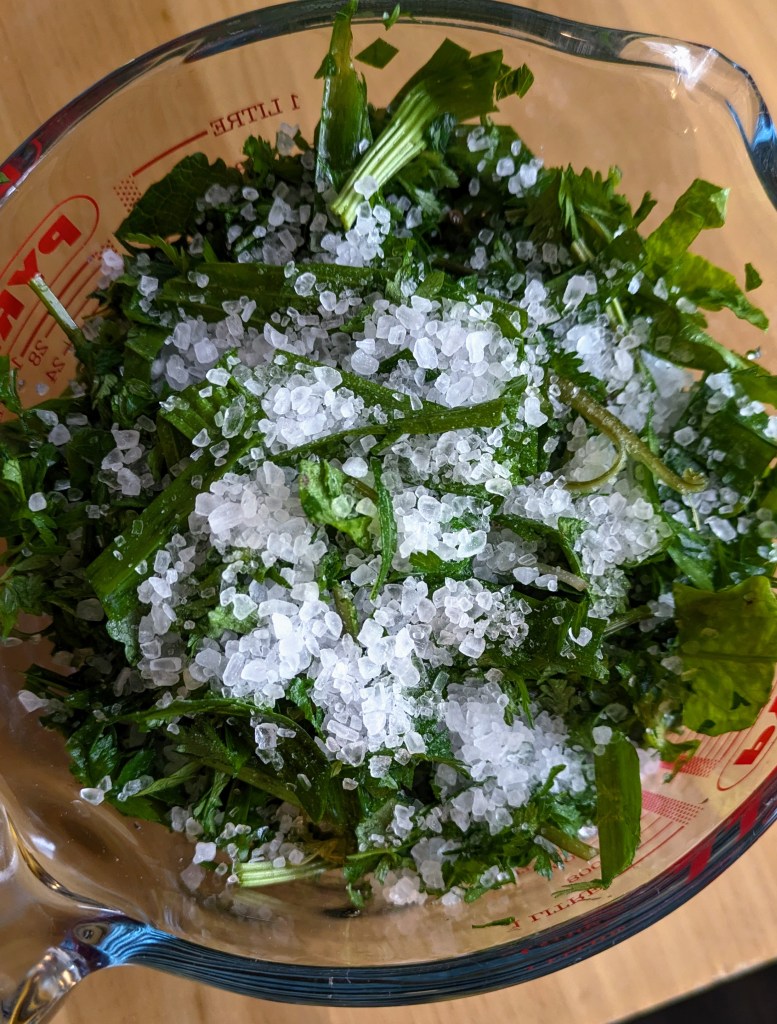
3. Weigh the greens to calculate the amount of salt needed. We want 1 part salt to 4 parts vegetables. I had about 180g in total of my wild herbs so I added around 45g of coarse sea salt and stirred it in.
4. Blend the greens up until completely smooth. The salt will help extract the water.
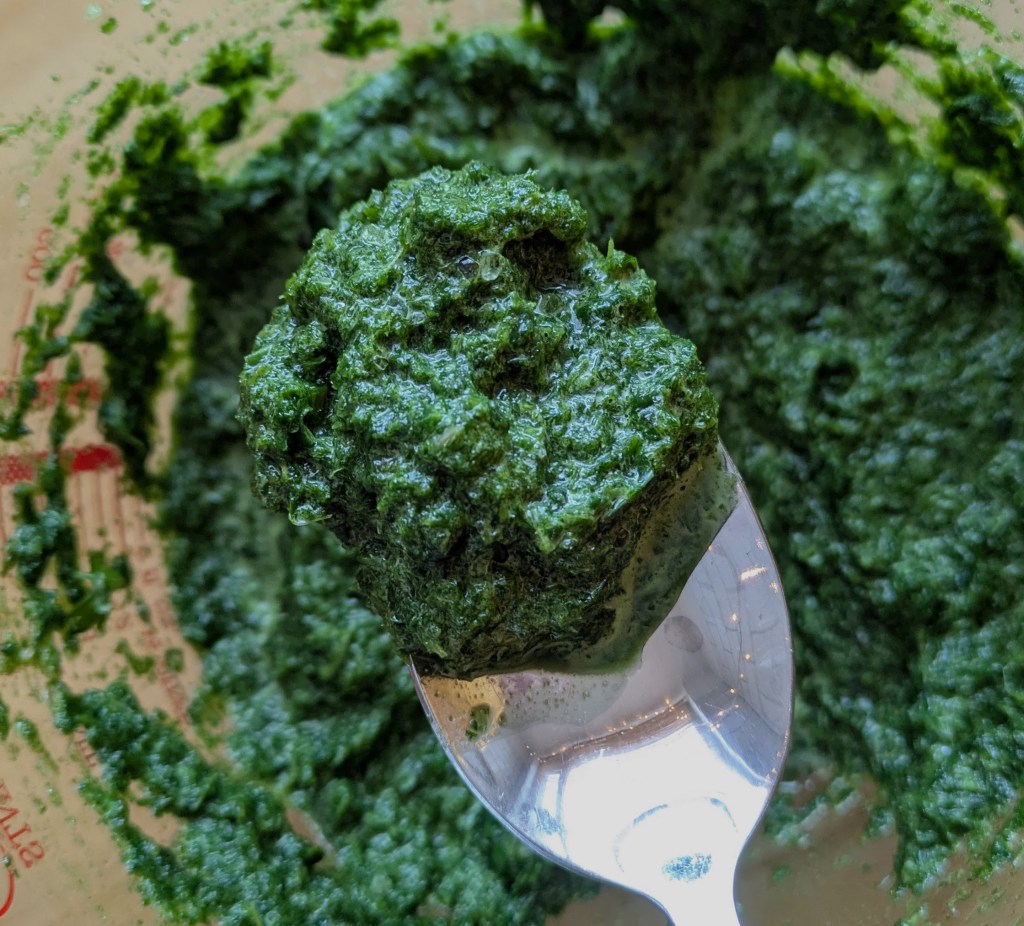
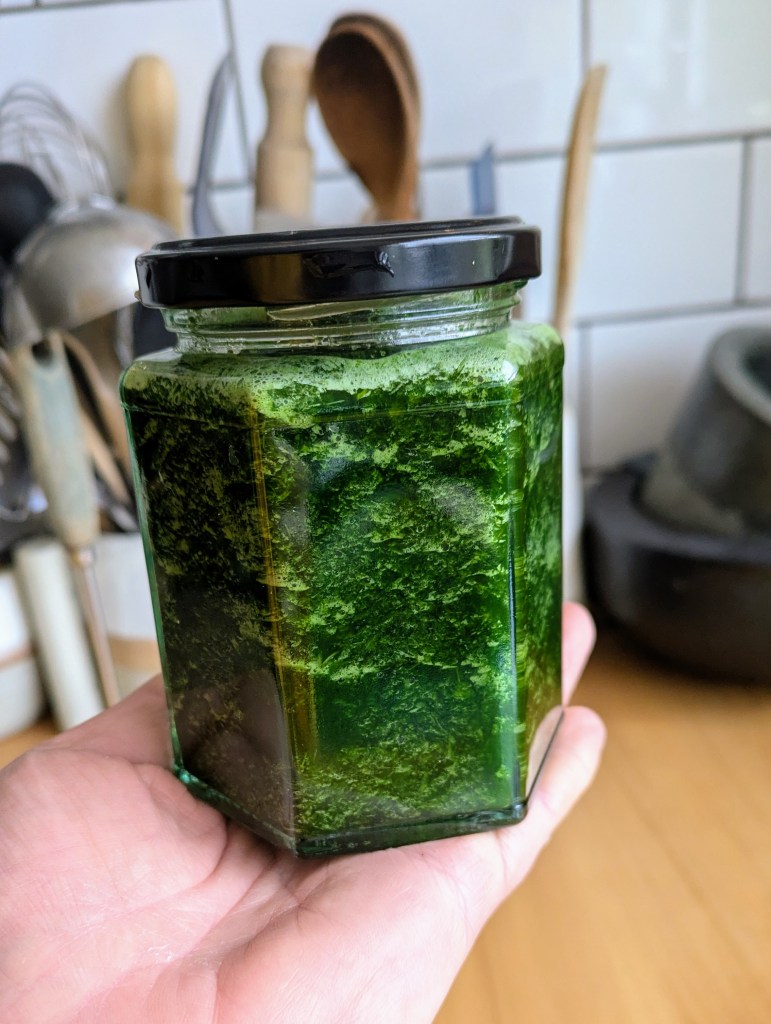
5. Transfer the blended greens to a sterilised jar and place in the fridge. After some time, the solids will settle down and the brine will cover them but you can use a little boiled water to help cover the solids if required.
6. Store in the fridge and use a clean spoon every time you use it to be sure to keep things clean. The high ratio of salt should keep this well preserved, but if you notice any odd smells or signs of spoilage then throw this away and try again.
Vegetable Broth with Charred Lemon
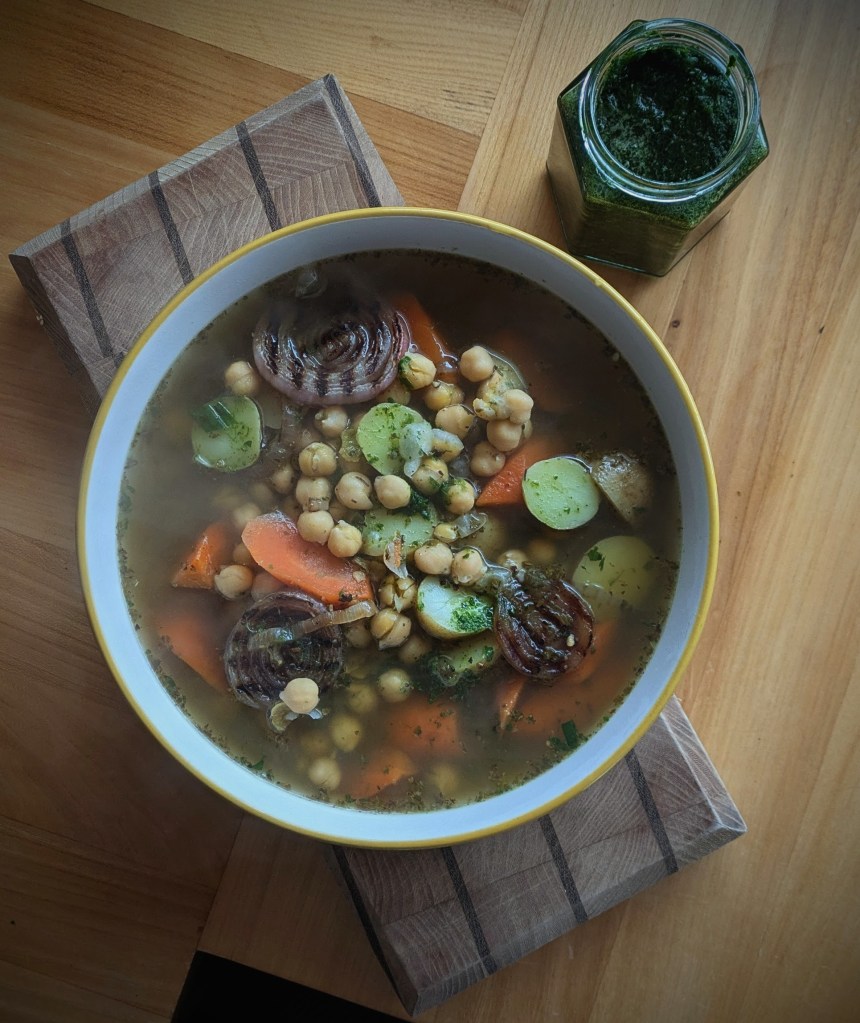
This is more of a suggestion than a recipe and was inspired by what was in my fridge today and the fact I got 5 lemons for 50p in the bargain section. I almost always have cooked potatoes in the fridge and batches of chickpeas in the freezer as they are two of my favourites but this would be good with any legumes, vegetables, grains or even a small pasta such as orzo would be delicious. The charred lemon is essential! This is a generous sized lunch for one or for two with some bread on the side.
Ingredients –
– 200g or one tin of cooked chickpeas
– 100g cooked potatoes
– 1 medium carrot peeled and chopped
– 1 half lemon
– 1 onion sliced in thick rings
– Freshly ground black pepper
– Nice olive oil
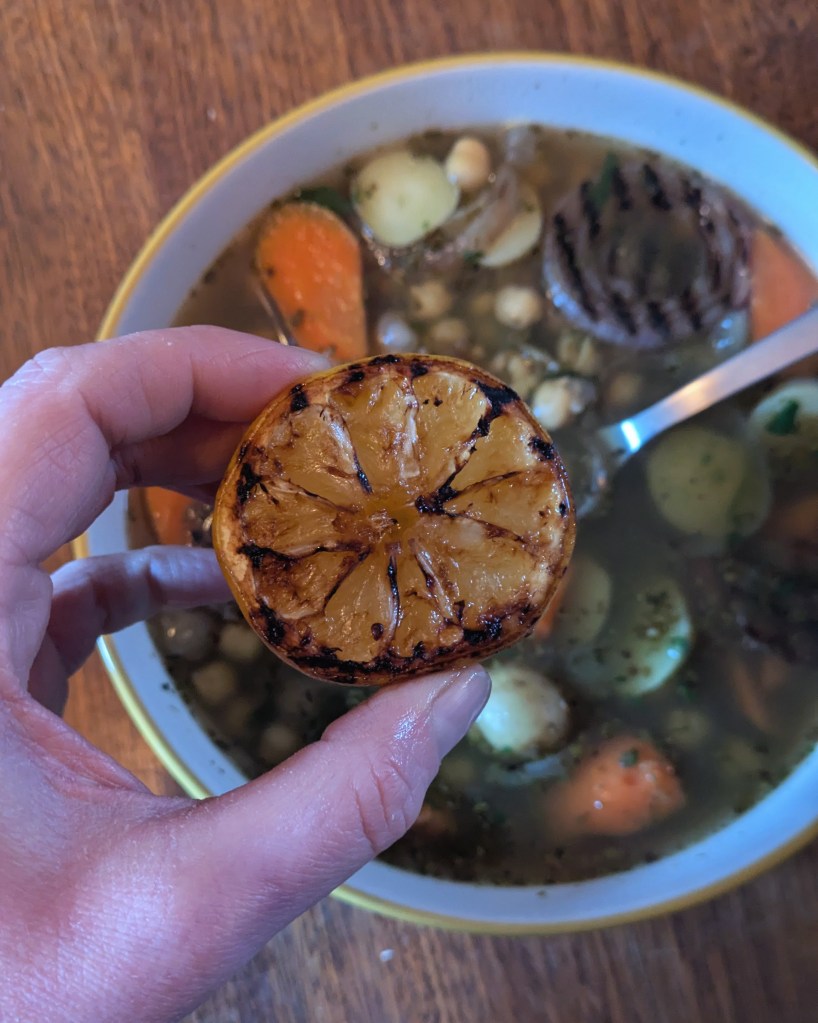
1. Char the lemon and onions on a hot griddle or pan.
2. Add the carrot to a saucepan with about a litre of cold water and place on to a medium heat. Cook until tender. Don’t throw the water out – just add in our cooked potatoes, onions and chickpeas when the carrots are cooked.
3. Finish by adding in one or two teaspoons of the wild stock base and taste. Add a little more if you would like. Add lots of black pepper.
4. Pour into a warm bowl and finish with the charred lemon and a drizzle of olive oil.
 feasting on weeds